Menu >>>>>>>>>>>>
  • Home: LEDline® Product;
  • Road Visibility and Useage
  • LEDline® Tunnel guidance
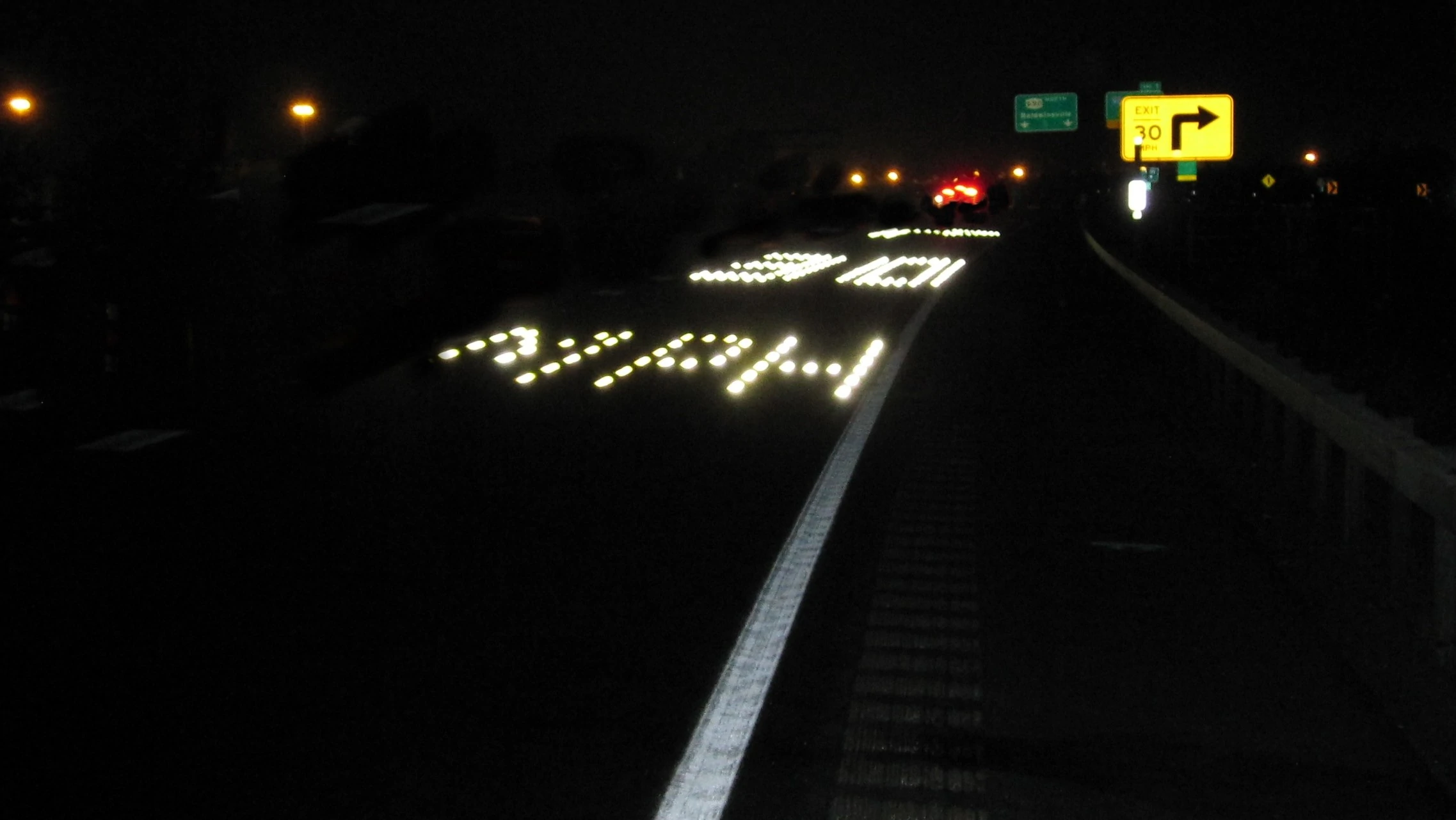
  • Barriers and Roads; In-pavement 30 MPH
  • LEDline® 10 Ton Roller Test
  • FHWA and Other LEDline® Tests
  • Airfields 1 Lit In-Pavement Signage
  • Airfield 2 Lit Refueling Area
  • Airfield 3 Vancouver De-icing Pads
  • Airfields 4 Firehall LEDline® Use
  • Helipads
  • Military /Navy /Marine
  • Other HIl-Tech Lamps
  • Contact us
image

Airfield 1. Visible In Any Weather, Lit In-Pavement Signs and Markings, Will Significantly Improve Airfield Guidance and Situational Awareness Reducing Hot Spots and Runway Incursions.

Impossible to miss; lit In-pavement Signs and Markings Reduce Hot Spot Issues and Even Eliminate Hot Spots caused by Drivers or Pilots Missing Signs and Ending Up On The Wrong Taxiway or Runway Without Authorization.
Lit In-Pavement Signs and Markings are Impossible To Miss Or Ignore, As Drivers and Pilots must drive or taxi Over Them!
How Could You Miss This Lit "H" If You Had to Drive Over It?
Why Lit In-Pavement Signs, Symbols and markings Are Impossible To Miss! Lit "H" Seen From A Low Angle

Why Linear Visual Aids provide Better Guidance

• Unlike a point source, which provides viewers just positional information, a linear visual aid PROVIDES both positional and directional information. • A number of FAA Trials of linear visual aids have demonstrated that linear guidance improves the pilot's ACQUISITION distance of these visual aids.• At night, linear visual aids create patterns, depth, and dimension, as their perceived aspect changes with the viewing angle. With point sources at night, UNLESS ONE IS TRAVELLING parallel to or above them, one cannot tell which lamp is next to or behind another. • Without a RECOGNIZABLE pattern, point sources create confusion at night. The classic example is the sea of blue edge lights at airfields.

At Night Everyone loses their depth pereption.

Unless one is parrallel to or almost above them, at night, as one can not tell which lamp is next to or infront of another, point sources confuse viewers.

No matter the viewing angle, at night, linear lamps always provide depth and dimention clues, recognizable patterns which restore lost nighttime depth perception.

To illustrate this, below are identical pictures, one darkened to remove all visual cues and the other with the visual cues restored.
With only the point source light guidance above, one could easily have an accident.
The same happens with helipads. No matter the viewing angle, with linear visual aids, a helipad's depth and dimension are always apparent. To illustrate this again, below are identical pictures, one darkened to remove all visual cues and the other lightened to provide other visual cues.
Increase the light, and the confusing point source visual aid's pattern becomes easy to see. Note how close to the helipad the picture was taken. Yet because there were no visual clues in the same picture above, one could not tell what the points of light represented.
No matter the amount of light, the height, viewing angle, or direction, linear LEDline® always creates patterns that give the helipad depth and dimension. Effectively, LEDline® restores lost nighttime depth perception, improving pilot guidance and safety, allowing them to judge depth, dimension, height, closing speed, drift and the many other vectors they use during daylight.
For approaching emergency hospital pilots, the linear LEDline® below makes it impossible to miss the helipad's depth and dimension, so pilots, like they do in daylight, can easily judge and gauge, orientation, height, closing speed, drift and much more easily make critical vector adjustments at night, so severely ill or injured patients can be landed gently.

Linear Lamps are more versatile than point source visual aids.

LEDline® Improves Ramp Worker and Aircraft Safety! LEDline® safety/guidance Ramp Lead-In Lines, when set to flashing, warn passing vehicles when an aircraft is being pushed out And To Watch out for the Wing walkers. This improves both worker and aircraft safety. LEDline® improves Ramp/gate Safety For; ----- pilot guidance; ----- Ramp Worker safety, ----- improving gate efficiencies, ----- Minimizing wingtip collisions, ----- Underneath Aircraft for better gate/aircraft security, ----- lowering aircraft turnaround times, especially in bad weather. These Safety Advantages minimize bad weather Delays, Which lowers everyone's costs.

LEDline® enhances safety for ramp workers, ground crews, and wing walkers. It also improves aircraft safety by reducing wingtip collisions.

LEDline® safety/guidance units are By far the Least Expensive and most versatile of Airfield Visual Aids.

LEDline® is Visible In Any Weather!

• Low-Cost Lit Lead-in Lines to Gates: Since LEDline® is easily installed via a simple saw cut 50mm (1.7") deep x 60mm (2.4") wide x 89cm (35") long in-pavement groove with glue, so LEDline®'s cost and installtion is approx. 60% less costly compared to standard point source inset lights;
• Instant Pushback Warning: Switched to flashing by tug drivers, the flashing LEDline® immediatly alerts passing vehicles when an aircraft is leaving the gate, improving safety for the aircraft, ramp crews, and wing walkers—making movement obvious before conflict develops. • Safer, Straighter Pushbacks: Painted markings disappear in poor weather; LEDline® stays visible, helping tug drivers maintain alignment and push the aircraft out straight, reducing wingtip collision risk. • Better Visibility Under Aircraft: Air terminal floodlighting causes shadowing under aircraft, particularly wide-bodied aircraft. These shadows impact ramp/gate security and employee safety as people working under the aircraft are difficult to see. LEDline® reduces dark shadow zones under wide-body aircraft, improving worker visibility, gate safety, and turnaround efficiency.
• Fast Installation, Minimizes Gate Downtimes: Many gate LEDline® surface grooves can be saw cut at the same time, and, as the saw cut width is only 60mm (2.4") wide x 45mm (1.7") deep, the saw cuts are not a hazard to any aircraft or vehicles. Therefore, only one gate at any time needs to be closed for 24 hours to allow the LEDline® installation glue to set, the other gates with the open saw cuts can still be operational. • Safety, Speed, and Savings: LEDline® helps reduce bad-weather delays, improve ramp awareness, protect assets, and lower operating costs.
Lit Gate Lead-in Lines: In the 2006 picture below, the deep snow has covered all of the painted pavement markings, yet the old-style green FAA taxiway way visual aids on the left (with incandescent bulbs, more heat than light), and the old-style yellow linear LEDline® on the right (they only had 6 x LEDs, but still melted the snow), both are equally visible, providing the necessary key guidance when aircraft and vehicles most need it. Pictures by Chas Triborn.

LEDline® Safety/guidance lighting Uses:

Non-Movement Airfield LEDline® safety guidance Use:

Non-Movement Areas: LEDline® is used for all sorts of inexpensive lit in-pavement markings in non-movement areas, such as;• lit lead-in lines to gates; • lit guidance lines for surface vehicles around terminals;• lit aircraft visual aid guidance through de-icing pads;• lit aircraft guidance in overnight aircraft parking areas;• lit in-pavement signage, to help guide aircraft and vehicles anywhere;• lit guidance through refueling areas. All of the above-lit guidance helps to reduce accidents in and around terminals in non-movement areas, which often do not require FAA/CAA permissions.
In 2024, the US Congress mandated the FAA to improve ramp worker safety (Bill HR 3935 Section E.C. 353) “Ramp Worker Safety Call to Action”). LEDline® can easily and quickly help achieve this at a fraction of the cost of standard airfield inset lamps.
  • Lit LEDline® Gate Lead In Lines Allow For;
  • • Inexpensive Lit Lead-in Lines to Gates: Since LEDline® is easily installed via a simple saw cut 50mm (1.7") deep x
  • 60mm (2.4") wide pavement groove and glue, it is approx. 60% less cost compared to the standard point source inset
  • lights.

  • • Advance notice when an aircraft is pushed out from a gate: To improve aircraft, ramp worker and wing walker safety,
  • when set to flashing, LEDline® can be used to warn passing vehicles and aircraft when an aircraft is
  • being pushed out of a gate. Here, to improve ramp worker safety, the tug driver can set the lights to flash so that
  • Everyone knows that an aircraft is being pushed out and that they should look out for the wing walkers.

  • • Improved Aircraft Safety: Tug drivers can not always see the painted pavement gate markings in bad weather. This can lead to aircraft wing tip accidents and damage as aircraft are not pushed out straight. However, lit LEDline®
  • safety guidance lead-in lines are visible in any weather. Therefore, they ensure that the guidance is always visible,
  • minimizing possible accidental wingtip collisions. • Improved Gate Safety: Air terminal floodlighting causes large shadows under aircraft, particularly wide-bodied aircraft. These shadows impact gate security and employee safety as people working under the aircraft are
  • difficult to see. Lit LEDline® safety lead-in lines provide lighting underneath aircraft so anyone there is visible.
  • • LEDline®'s Quick Installation, Minimizes Gate Downtimes: Many gate LEDline® grooves can be all saw cut at the same time, as the saw cut width is only 60mm (2.4") wide x 45mm (1.7") deep, so even when left open, the saw cuts
  • are not a hazard to any aircraft or vehicle. Therefore, the gates with the open saw cuts can still be operational. Only
  • one gate at any time ever needs to be closed for 24 hours, and that is to allow the LEDline® installation glue to set. • LEDline® improves Gate Safety and efficiency by minimizing bad weather delays, saving time and money.
Always-visible LEDline can create inexpensive lit “J” lines, which can be changed to flashing when an aircraft is being pushed out. Lit “J” lines; o By making the “J” line visible in any weather, it improves aircraft and ramp worker safety and efficiency by helping pilots to taxi in to the optimum position for the exit ramp, saving time, especially in bad weather. o Since tug drivers can always see the lit guidance and push the aircraft out straight, it minimizes wingtip collisions. o When set to flashing by the tug drivers it would remind then to follow the push out proceedures. o When set to flashing, it warns everyone around to watch out for the wing walkers and aircraft being pushed out, improving safety for the aircraft and the wing walkers. o With a lit designated apron line marking to where tug drivers push the aircraft out before pilots turn on their engines, it will minimize jet blast burns to ramp workers. o This designated lit apron line, when set to flashing on pushout, will be even more visible to any passing vehicles than the flashing "J" line section, reminding everyone to watch out for the ramp wing walkerse and the exiting aircraft, improving airfield safety for both.
LEDline® enhances safety for ramp workers, ground crews, and wing walkers. It also improves aircraft safety by reducing wingtip collisions.
Here, the snow has covered up all of the painted pavement markings, yet the lit, yellow LEDline® safety/guidance lighting, (old style, with only 6 x LEDs), is still clearly visible. Today's solid LEDline® safety/guidance units have 12 x embedded LEDs, so they are much brighter and still melt snow without any additional heating elements. (Note: LEDline® lamps are the only LED lamps that melt snow without any additional heating elements.)

Use of Movement Area LEDline® Safety/Guidance Lighting: (Requires FAA/caa approval).

As from a distance there is more lit area displayed, vertical/linear lit signs and markings are more visible than lit horizontal markings.
Below is the same picture from a much lower angle to show how pilots might see this lit Hold Short Line much further away. Notice in this low-angle view how much brighter and more noticeable the vertical lines are compared to the horizontal. This is because there is much more lit area facing the viewer with the vertical than the horizontal lit lines.
Before using LEDline® safety guidance lighting in Movement Areas, it is essential to obtain permission from the country's Civil Aviation Authority, such as in the USA, the FAA.

Always Visible LEDline® is Used As In-pavement signage to improve guidance and situational awareness.

When used in conjunction with ICAO Annex 14 standards, LEDline® enhances airfield safety by improving the visibility of pavement markings in all weather conditions. This minimizes Runway incursions!
Examples of Lit In-Pavement Markings.
Below are various LEDline® lit markings in a variety of weather, including deep snow. Unlike the green taxiway lights below, LEDline® melts snow without any additional heating elements, ensuring it remains highly visible.
Visible In Any Weather, Lit In-Pavement Signs and markings will significantly improve airfield guidance and Situational Awareness, Reducing Hot Spots and Runway Incursions.
No One Likes Having NOTAMs or Hot Spots about their airfield. LEDline® can help mitigate or even eliminate the issues causing the NOTAMs and Hot Spots.
LINEAR VISUAL AIDS ARE MUCH MORE VERSATILE THAN POINT SOURCE VISUAL AIDS, SINCE BEING LINEAR, THEY CAN CREATE EXTENDED LIT GUIDANCE LINES AND IN-PAVEMENT LETTERS, NUMBERS, GUIDANCE ARROWS AND COMPLETE SIGNS ANYWHERE. SUCH SIGNS ARE IMPOSSIBLE TO MISS SINCE PILOTS AND DRIVERS MUST TRAVEL OVER THEM.
  • With permission from Civil Aviation Authorities (in North America, the FAA or Transport Canada), LEDline® could be used to improve pilot and surface vehicle driver guidance and situational awareness at Hot Spots, reducing their impact and issues, thus reducing runway incursions.
  • Some airports in the United States and internationally have NOTAMs and designated Hot Spots issued against them because pilots or ground vehicle operators, missing critical signage, have ended up on unauthorized taxiways or runways.

  • Ground radars designed to prevent runway incursions are expensive, so they are primarily used at busy airports. And ground radars are usually reactive, since they detect offending parties after they have taxied or driven into areas they are not supposed to be in. In addition, ATC, once notified of an issue, must assess the situation and then notify the offending parties. These parties must then react in a timely manner, and the combined response times of the ATC and the offending parties may not be fast enough to prevent fast-moving accidents. As shown by airfields with ground radars, NOTAMs and Hot Spots still occur, so time is not on ATC's side.

  • What is needed are pavement markings that cannot be missed, are visible in any weather, and provide immediate guidance to prevent pilots and surface vehicle drivers from missing critical signs and ending up on the wrong taxiway or runway without authorization. In effect, lit in-pavement signs will prevent pilots and surface vehicles from missing the signs in the first place, reducing the issues that ATC has to manage.
  • Lit visual aids exist because they offer significantly better guidance than paint. Similarly, lit in-pavement markings offer significant improvements over paint or thermoplastics as they are always visible, ensuring that pilots or drivers do not miss key critical signs and end up on the wrong taxiway or runway without authorization.
  • Lit in-pavement markings elicit an immediate response from viewers and are impossible to miss or ignore, as viewers must taxi or drive over them, thereby immediately improving airfield guidance and situational awareness.
  • Reducing Hot Spot issues and runway incursions is important, and Lit in-pavement markings are a way of reducing these issues.
  • In Movement Areas, with Civil Aviation Authority approval, use LEDline® as an addition to, supplement, or an enhancement of all necessary standard Movement Area Visual Aids, for;
  • • Hot Spots: By using lit LEDline® In-pavement signage and guidance for improved pilot and driver guidance and
  • situational awareness HOT Spot issues can be reduced.
  • • Critical painted Taxiway and Runway Signs Can Be Highlighted: Painted markings disappear in bad weather when they
  • are most needed, yet they are considered critical for airfield guidance. If they are not visible 24/07, why have them?
  • By outlining key pavement signs like "No Entry" and highlighting taxiway/runway signage and numbers, these lit
  • guidance markings will be visible in any weather;

  • • Provided the standard taxiway blue edge lights are present, green centerline guidance is optional for many airfields.
  • Therefore, to improve safety (as centerlines keep aircraft i the middle of the taxiway), supplement the blue edgeline
  • guidance with green linear LEDline® centerline guidance for, far less cost and improve airfield efficiency, especially
  • in bad weather;

  • • To help the wigwags be more visible in any weather, use in-pavement LEDline® wigwags, flashing like the taxiway
  • edge wigwags across the whole taxiway width. This way, the wigwags would be much more conspicuous and
  • impossible to miss as pilots must taxi over them, so would help reduce runway incursions.
  • • To increase airfield capacity, highlight the early runway exits to taxiways for the smaller aircraft. Here, lit arrows set
  • into the runway pavement could indicate the early runway exits to taxiways, so the smaller aircraft don't hold up the
  • landings of any following heavies that need to use the whole runway to stop.
  • • On moveable platforms, temporary signage indicating closed sections of the airfield could also use LEDline®;
  • All of the above uses of LEDline® are supplemental to and enhance all required standard ICAO/FAA/Transport Canada Movement Area visual aids. They increase the safety, capacity, and efficiency of airfields, especially in bad weather. And, as nothing is removed and all standard Movement Area guidance remains, lit in-pavement signage and guidance, whilst enhancing airfield safety and efficiency, should allow airfields to still be fully ICAO/FAA/CAA compliant.l
Improve Airfield Safety. No Entry signs and other key painted markings can be outlined in lit red LEDline® so they don't disappear in bad weather and are always recognizable.
Always visible in-pavement letters, numbers, symbols, or signage are impossible to miss or ignore, as drivers and pilots must travel over them. Below is a video of a lit pavement sign and symbol demonstrating just how impossible it is to miss or ignore lit in-pavement markings like these.

Video can’t be displayed

Early (6 x LED) gREEN LEDline® SAFETY GUIDANCE at . The painted pavement markings have disappeared under the slick of rain, yet, the LEDline® is still highly visible.
As A direct Comparison, below, GREEN LEDline® taxiway SAFETY/GUIDANCE LIGHTING is used right next to standard Green FAA Taxiway Lights. Both are equally visible.
MOVEMENT AREAS: Most Civil Aviation Authorities (CAA); ICAO; FAA, Transport Canada, etc., are familiar with linear LEDline® SAFETY/GUIDANCE. Because it is linear, it is not a point source, but is an area luminance source, so they have difficulties in measuring the light output. YET being linear, it demonstratively provides better directional guidance. (NOTE: A single LEDline® unit provides both position and direction. A single point source can only provide positional information and once needs a number of them togeather provide direction. That is why for safe taxiing, ICAO specify that 4 lamps need to be bvisible and the FAA mandates that at least three lamps must be visible). As such, LEDline® has yet to be approved for Movement Areas. Therefore, local CAA authorities must provide permission to use LEDline® safety/guidance in Movement Areas, and requests to use it there should make it clear that it is being used to supplement and enhance the standard taxiway/runway SAFETY SIGNAGE and painted markings. (Note: The research presentation on linear visual aids, demonstrates that the longer the lit visual aid, the better pilots prefer the guidance compared to point sources. Presented to the Illuminating Engineering Society (IES) Aviation Lighting Committee Fall Technology Meeting 26 October 2016 "Linear Airfield Lighting Evaluations: From the Laboratory to the Field". The longer the visual aid, the faster were the pilot's acquisition. Presented to the IES Committee by; John D. Bullough (RPI Lighting Research Center), Shawn Pruchnicki (Ohio State University), Seth Young (Ohio State University), Garrison Canter (CSRA, Inc.) ) From all of the FAA's previous research into linear visual aids and the presented Ohio State University field research and our experience (with e-mails from early LEDline® use; ion. Pilots prefer linear visual aids and the directional guidance they receive.
I’m a paragraph. Drag me to add paragraph to your block, write your own text and edit me.
LEDline® Cut Sheet (pdf)
Additional Information is Available at HIL-Tech Ltd. at nhutchins@cogeco.ca
LEDline® Brochure 2022
Unless otherwise stated, all Pictures, Videos, Files, and Texts are the Copyright of HIL-Tech Ltd.LEDline® is a Registered Trademark of HIL-Tech Ltd.
HIL-Tech Ltd.
Copyright © 2021 HIL-Tech Ltd. All rights reserved.
2119 Devon Road, Oakville, Ontario, L6J5L9, Canada
905 849-6134
nhutchins@cogeco.ca

We use cookies to enable essential functionality on our website, and analyze website traffic. By clicking Accept you consent to our use of cookies. Cookies and Privacy Policy.

Your Cookie Settings

We use cookies to enable essential functionality on our website and analyze website traffic. For more information, read our Cookies and Privacy Policy below.

Cookie Categories
Essential

These cookies are strictly necessary to provide you with services available through our websites.

Analytics

These cookies collect information that is used in aggregate and in an anonymized form to help us understand how our website is being used and how effectively our site is performing.